Lenovo technology powers Márquez's historic MotoGP comeback
The biggest comeback in MotoGP history
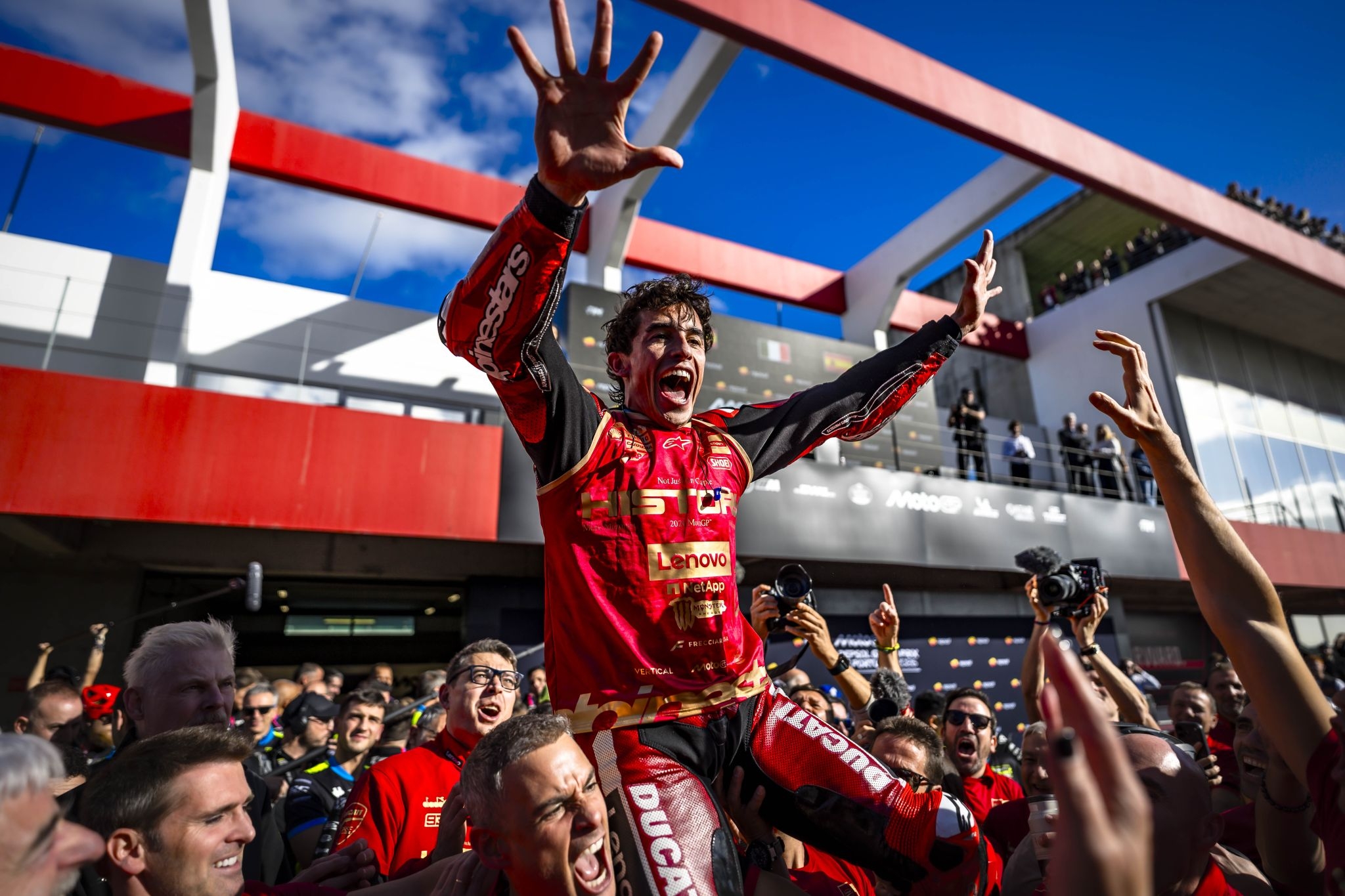
On 22 November 2026, Marc Márquez clinched the MotoGP Riders' World Championship at the Portuguese Grand Prix, completing what many considered impossible: overcoming a 102-point deficit — the largest in the sport's history — while also recovering from injuries that had sidelined him for much of the season. The victory, the Ducati Lenovo Team's fourth title in five years, was powered by a combination of Márquez's determination, Ducati Corse's engineering expertise, and Lenovo's high-performance computing infrastructure.
Data at the speed of racing
Throughout the 2026 season, Lenovo's expanded HPC infrastructure — developed jointly with Ducati — delivered roughly 48% more processing power and double the memory capacity. This enabled Ducati Corse engineers to process data within the razor-thin windows between track sessions. In MotoGP, telemetry and video data only become available once the bike returns to the garage, and the next session may begin minutes later. Lenovo workstations, edge servers, and HPC systems provided the speed to analyze data, compare it with rider feedback, and identify setup changes before the next track exit.
1,500 simulations and 300GB of data
The numbers illustrate the scale of Lenovo's contribution. Over the season, the team ran 1,500 simulations specifically for Márquez's program, covering vehicle dynamics, aerodynamics, electronics, tire behavior, and setup optimization. Engineers evaluated around 100 setup changes across tests and race weekends, from suspension settings and bike geometry to electronics and vehicle height. Approximately 80 hours of track activity were analyzed through telemetry comparison, derived parameter calculation, and video review. In total, about 300GB of data — simulation outputs, raw motorcycle data, and engineering information — was processed for Márquez alone.
Development didn't stop during injury
When Márquez was sidelined after his Le Mans crash, Lenovo technology kept bike development moving. Through the Ducati Lenovo Remote Garage in Bologna, specialists continued processing data, running simulations, and collaborating with the track team — all without new laps from Márquez. Engineers used Lenovo systems to evaluate potential changes while preserving the bike characteristics he would need upon return, balancing performance, predictability, and rider confidence.
Measuring the comeback lap by lap
Once Márquez returned, Lenovo-powered analysis compared his pre- and post-injury performance across braking, throttle application, corner speed, and lean angle. This data, combined with Márquez's feedback and comparisons with other Ducati riders, gave engineers valuable context. Rapid data processing meant fewer laps spent testing solutions that simulations could already exclude, leading to faster, more structured decision-making and saving precious track time.
Building the 2027 Desmosedici GP
The 2026 season's data is already feeding development of the 2027 Desmosedici GP, which will face new regulations. Lenovo-powered analysis and simulations help Ducati Corse identify which characteristics deliver performance across different riders, circuits, and conditions. As Luca Rossi, President of Lenovo's Intelligent Devices Group, noted: "This impressive Riders' Championship victory... is a testament to what a strong partnership built on innovation and collaboration can achieve." Claudio Domenicali, CEO of Ducati Motor Holding, added that the win "showcases what is possible when technology and human performance work collaboratively."